
Denim Quilt, April 2007
3 months ago


Post News
Kingsport, TN
May 26, 1977
APPALACHIA, VA---Miss Georgia got aboard the Virginia and Southwestern train headed for Daniel Boone (then known as Albert Yard.) The year was 1907.
She showed her pass to the conductor, Captain Folmsbey. He snorted “Hmmmph. We’re going to have women operators on this line?”
“Yes,” she said and took a seat by the window of the passenger car.
Captain Folmsbey was later to become a great friend of the 17 year old wisp of a girl who boarded the train that day on her way to becoming the first woman employee of the Virginia and Southwestern Railroad.
Her name was Georgia Harrman but she married Dr. William B. Peters in October of 1911. Mrs. Georgia Peters is 87 years old and lives in Appalachia, VA, the last place she worked as a telegraph operator for the railroad. Miss Georgia at her desk, Intermont Office of Virginia & Southwest Railroad, Appalachia, VA, 1911.
Miss Georgia had always wanted to study telegraphy. Her brother, Jr. R. Avent, was a dispatcher for the railroad.
“He helped me a lot when I took the telegraphy course,” she said.
When the train pulled into the Albert Yard that morning in 1907 the sun had not been up long. As a relief Telegraph Operator she was to work from 7 a.m. to 7 p.m., a shift that seemed a bit long for a 17 year old girl. She would spend all the daylight hours indoors on the second floor of the tower that served as an office.
“They had a semaphore that I had to pull down with a rope,” she said. “If the train saw a red light he stopped and picked up his orders. If there were no orders he didn’t stop.”
Railroad men drifted in and out of the office as the 17 year old girl they to learn to call “Miss Georgia” took her place at the telegraph key. There was skepticism of course. And there is little doubt that some of the men, when talking in private, predicted all sorts of doom and destruction due to befall the railroad now that the Virginia and Southwestern had hired a woman---no, a girl---to handle routing and sidetracking orders for the trains.
But the men quickly learned that Miss Georgia did not make mistakes.
“Some of the men wondered about it,” she said with a smile. “I think they wondered whether I would be a good operator, but all the railroad men were real nice and did anything they could to help me.”
It is not hard to understand why the men, particularly the engineers and conductors, were a bit wary. The operator took their routing orders.
“You really knew you had a particular job. If you made a mistake you could cause a head-on collision. You had to be careful,” she said.
It was an education for a young girl. An education in responsibility. The pay was not fantastic. Even though she made the same salary as the new male operators it still amounted to about $40 a month.
“I enjoyed the work. I learned a lot about people because I came in contact with so many different types,” she said.
In a year and a half Miss Georgia worked relief in the Bristol Yard office and the telegraph office at Benham. She was then transferred to the newly opened Glenita office (now known as Natural Tunnel.) View from window of Intermont Office of Virginia & Southwest Railroad, Appalachia, VA, 1911
If nothing else, if the hours were long and the pay short, Natural Tunnel was a beautiful place to work. The rock and laurel were stacked in front of the office window like a screen for nature’s own television program.
“When I was working at ‘the tunnel’ people from Bristol would come on a passenger train and have a picnic between the two tunnels. They would take another train back in the afternoon,” she said.
In 1910 Miss Georgia got her last transfer, to the Intermont office in Appalachia.
“I enjoyed my work at Appalachia best,” she said. “There was heavier traffic here. But I only had an 8 hour shift. Everywhere else the shifts were 12 hours.
“It was interesting work. I don’t see why more women didn’t go into it. It was a big responsibility then. At that time it was harder for a woman to get a job. It has to be easier for them to get a job now.
“I miss riding the trains,” she said glancing out the window at the mountains. “I wish we had them like we used to have.”
source: Post News, Kingsport TN, May 26, 1977; This version edited; original at: http://news.google.com/newspapers?id=3GcPAAAAIBAJ&sjid=ZIYDAAAAIBAJ&pg=4033%2C1790763
telegraph+operators Appalachia+VA Virginia+and+Southwest+Railroad appalachia appalachian+history history+of+appalachia
“Andy Orville Bozzel is the son of Mr. And Mrs. George Bozzel. He was born in Andover, VA in Wise County, November 24, 1922. His education is limited, he having completed the fourth grade. He quit school in 1937 on account of lack of money to send him on. He lives a mile from school. He has lived in Appalachia [the town in VA] for the past five years. He seems to be a bright youth but not anxious to study in order to succeed.
“He is now in the C.C. Camp and is receiving thirty dollars per month. Of that amount twenty two is sent home to his parents. He got to go to the C.C. Camp by his mother taking him to the welfare office and asking that he be signed up. Since going to camp he is completely self supporting. He has been there only a short time. I received this information from his mother. His mother told me that she asked him if signed up to go to night school in Camp and he answered, “You know I did for I want more education.”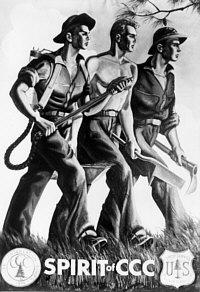 “His mother has completed the ninth grade in school and his father the fourth. Orville’s home life is not very pleasant. There are nine children two girls and seven boys. The girls are married and not living at home. The other children at home are under sixteen, all boys. They live in a run-down four-room house which has no convenience whatever. I have been in this home a number of times, knew Orville personally and know the condition of the home he came from.
“The mother works out when she can get it and is sole. The father works not at all, although he used to be a good worker and provided well for his family. He is letting drink get the best of his manhood. The father is 46 years old and the mother is 38 years old.
“There are no magazines or daily papers come to their home. I have known the children to have to go to school without breakfast. They have received aid from the Relief. He [Orville] spends his leisure time in reading, going to movies and playing ball. He is not a church member and does not attend church.
“The yearly income of family is $180.00.”
Maude R. Chandler
October 2, 1939
From a collection of approximately 1,300 Work Projects Administration/Virginia Writers’ Project life histories, social-ethnic studies, and youth studies that were written by agency staff members between 1938 and 1941.
source: http://tinyurl.com/2yb9w3
Andy+Orville+Bozzel CCC Appalachia+VA WPA +Virginia+Writers+Project appalachian+culture appalachian+history history+of+appalachia


