
Denim Quilt, April 2007
3 months ago


The convenient and pithy term for the mountain people of Kentucky, "our contemporary ancestors," does not indicate the origin of the customs, beliefs, and peculiarities which persist among them. For they too had ancestors. These were, for the most part, British, and of the soil. Just as today many a mountaineer has never been ten miles from his birthplace, so also his forebears remained at home.
They were sturdy men and women, steeped in traditional ways, independent and as little humble as possible. The mountaineer is that way too. He cares neither for ease nor for soft living. He is hospitable. "Welcome, stranger, light and hitch," is the salutation, and the stranger is bidden to take "damn near all" of whatever the table offers.  A hunter by race, he is first of all a poacher, in arms against such as would deny him the right to take game where he may find it, a trait dating back to the time of Robin Hood in England. His speech is reminiscent of this older land and people. Labeled as "a survival," the mountaineer in reality is on the defensive, protecting himself against later comers and strange ideas. "I wouldn’t choose to crave this newfangled teachin’ and preachin’," he says. "All I ask is to be let alone. I was doin’ middlin’ well. The hull kit and bilin’ can go to the devil."
Mountain dialect reflects the Anglo-Saxon origin of the mountain people; obsolete forms found in Shakespeare and the King James version of the Bible are in common use. "Clumb," "writ," and "et" for climbed, wrote and ate are common enough if you go back a few centuries. "Buss" for kiss, "pack" for carry, and "poke" for pocketbag and the like are pure Elizabethan.
Shakespeare said "a-feared," as does the mountaineer today, and "beholden" is common to both. "His schoolin’ holp him mighty," says the proud mountain father; King Richard of England said, "Let him thank me that holp send him thither." "Hit’s right pied," shouts the mountain boy when the snake he has stoned puffs up and mottles. But he probably never read of "meadows trim with daisies pied," or heard of the Pied Piper of Hamelin. When he sings, the mountaineer "rolls a song," and his expression, "he looks like the hind wheels of bad luck," is so expressive that only the carping student would seek to trace its heritage.
Folklore is found not only among the mountaineers but in every county in the State, in town and in city. In the mountains, however, because of close-knit family and community ties, it is part of everyday life. Songs and sayings are more than quaint and queer; they have living reality.
The WPA Guide to Kentucky, Compiled by the Federal Writers’ Project of the Work Projects Administration for the State of Kentucky, F. Kevin Simon, Editor,Univ. of KY 1939, publ. Harcourt Brace & Co.
kentucky+history WPA mountain+dialect appalachia appalachian+history appalachian+mountains+history
Established in 1935, the Pack Horse Library Project was aimed at providing reading materials to rural portions of Eastern Kentucky with no access to public library facilities. Librarians riding horses or mules traveled 50 to 80 miles a week up rocky creekbeds, along muddy footpaths, and among cliffs to deliver reading materials to the most remote residences and schools in the mountains. Some homes were so remote that the book women often had to go part of the way on foot, or even by row boat. Original image caption reads: Whitley County, Kentucky. One of the mountain homes visited by WPA Pack Horse librarian. Man was permanently injured by bullet wound.
Materials used by the pack horse libraries were stored in headquarters libraries, usually located at the county seat. Collections consisted mostly of damaged books and magazines that larger libraries no longer wished to circulate, as well as out-of-date textbooks once used by schools or churches. (The W.P.A. only funded librarian salaries; it did not provide funds for collection development.)
When demand for materials exceeded the supply, scrapbooks of magazine clippings, anecdotes, local recipes, and newspaper clippings were made by the librarians as additional resources for the collection. These became very popular in the region, enough so that patrons began making scrapbooks of their own recipes, family history, sewing patterns and child-rearing advice for circulation by the pack horse librarians throughout the community.
By 1936, handmade and donated materials could not sustain the circulation needs of the pack horse patrons. Surveys of readers found that pack horse patrons could not get enough of books about travel, adventure and religion, and detective and romance magazines. Children's picture books were also immensely popular, not only with young residents but also their illiterate parents. Per headquarters, approximately 800 books had to be shared among five to ten thousand patrons.
To help overcome the shortage, Lena Nofcier, Chairman of Library Service for the Kentucky PTA, began the Penny Fund Plan which called on every PTA member in the state to contribute one penny toward the purchase of new books. Nofcier also petitioned the help of boy scout troops, Sunday-school classes, private organizations/clubs and children's school groups to locate or donate books for the pack horse libraries. Through her efforts, existing pack horse collections not only grew, but eight new pack horse libraries were also established.
Despite the ongoing shortage of materials, the Pack Horse Library Project was considered very successful, and one of the most unusual library services ever offered in the country. During its height, the program boasted 30 libraries serving close to 100,000 Eastern Kentucky residents. Interest in ideas outside the realm of Appalachia, an appreciation for education, and an introduction to global cultures were fostered by the program in an area where one-room schoolhouses and churches were the only means of learning about the world.
The pack horse libraries came to an end in 1943 when the W.P.A. withdrew its funding from the project. Consequently, many of the areas served were left with no library service whatsoever. Some effort was made to retain the existing collections, being made available in county courthouses. However, the delivery service needed for isolated communities was no longer available, leaving some communities without access to books for decades until bookmobiles were introduced to the area in the late 1950s.
Source: Kentucky Department of Libraries and Archives
pack+horse+librarians WPA +Whitley+County+KY appalachia appalachian+history appalachian+mountains+history
“Andy Orville Bozzel is the son of Mr. And Mrs. George Bozzel. He was born in Andover, VA in Wise County, November 24, 1922. His education is limited, he having completed the fourth grade. He quit school in 1937 on account of lack of money to send him on. He lives a mile from school. He has lived in Appalachia [the town in VA] for the past five years. He seems to be a bright youth but not anxious to study in order to succeed.
“He is now in the C.C. Camp and is receiving thirty dollars per month. Of that amount twenty two is sent home to his parents. He got to go to the C.C. Camp by his mother taking him to the welfare office and asking that he be signed up. Since going to camp he is completely self supporting. He has been there only a short time. I received this information from his mother. His mother told me that she asked him if signed up to go to night school in Camp and he answered, “You know I did for I want more education.”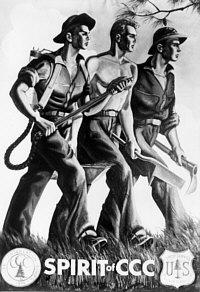 “His mother has completed the ninth grade in school and his father the fourth. Orville’s home life is not very pleasant. There are nine children two girls and seven boys. The girls are married and not living at home. The other children at home are under sixteen, all boys. They live in a run-down four-room house which has no convenience whatever. I have been in this home a number of times, knew Orville personally and know the condition of the home he came from.
“The mother works out when she can get it and is sole. The father works not at all, although he used to be a good worker and provided well for his family. He is letting drink get the best of his manhood. The father is 46 years old and the mother is 38 years old.
“There are no magazines or daily papers come to their home. I have known the children to have to go to school without breakfast. They have received aid from the Relief. He [Orville] spends his leisure time in reading, going to movies and playing ball. He is not a church member and does not attend church.
“The yearly income of family is $180.00.”
Maude R. Chandler
October 2, 1939
From a collection of approximately 1,300 Work Projects Administration/Virginia Writers’ Project life histories, social-ethnic studies, and youth studies that were written by agency staff members between 1938 and 1941.
source: http://tinyurl.com/2yb9w3
Andy+Orville+Bozzel CCC Appalachia+VA WPA +Virginia+Writers+Project appalachian+culture appalachian+history history+of+appalachia

Caption to the photo reads: "Pike County, Kentucky. Mother of two children (husband is tubercular and bed ridden) supports her family and buys necessary medical supplies with her WPA wages."
Goodman-Paxton Photographic Collection, 1934-1942
University of Kentucky
Digital ID: kukav:64m1:833
Pike+County Kentucky WPA +appalachia appalachian+history history+of+appalachia
Tennesseans called it the “la-la.” Elsewhere known as the john, the shanty, the shack, the throne, the shed, the relief office—it was the humble outhouse. The little buildings "out back" were as important as any building built before indoor plumbing. This was the building you located as soon as possible when you came to visit, and if your guest was the preacher, you invited him outside on some pretext so he could spot "the necessary room" without asking.
During the 1930s the WPA built thousands of outhouses across America. Three-man teams would spend an average of twenty hours on the construction of each one. Where possible the farm family receiving the new outhouse would pay for the materials (about $17 per outhouse), while the WPA supplied the labor free.
These were outhouses like America had never seen before. The American Red Cross developed the basic design. This design featured an enclosed, vented pit for the waste, was fly and vermin proof, and afforded a standard of cleanliness and sanitation that earlier generations would have considered effete. The building had a concrete floor and a carefully carpentered seat with a close fitting lid to exclude flies. Although many design variations existed, the two basic designs were single seater and two seater.
The two seater was preferred by large families---the second seat had a smaller hole to prevent children from falling through---by those who liked company, and by those who needed a place to set their lantern at night.
“To the right of the narrow entrance was a complete collection of fishing equipment ranging from rods and reels to every size, shape and color of lure imaginable. Directly above these hung an array of ingenious traps which proved to be the scourge of every muskrat and mink for five miles up or down river. In the rear of the little edifice stood two tall bushel baskets containing an endless conglomeration of treasures ranging from outdated articles of clothing to ancient magazines.
“The latter provided amusement and literary driblets for the perusal of the lackadaisical visitor who wished to bide his time informatively. And we must not overlook that standard piece of equipment without which the outhouse would not have been an outhouse--that savior of the toilet-paper-destitute family--the good old catalog. Where would we have been without it? Why do you think the mail-order house was such a thriving success?”
Robert E. Dalton
born Robert E. Lee Dalton, 1938,
in Itman, Wyoming County, WV

"Aunt Betty Arnett lived 87 years of her life unable to read or write; she lives far back at the headwaters of Licking River in Magoffin County, KY. She is now doing well in the first grade in literacy classes offered in the mountains."
Photo caption by George Goodman
1939 photo describes 'The Education Project,' a WPA sponsored literacy program.


