
Denim Quilt, April 2007
4 months ago


“I'll tell you, Mrs. Higher was right down here on the corner. As you go down over the hill and go to town. She was right on the corner. That corner building was where she was. And she was a mighty good old lady. She kept all the loggers, you know, the woodsmen came and she took care of them and was good to them. And she set a good table. And then she married this... she'd been married to Magan. And he was a drunkard, you know, she was married to him and he died. And then she married this old Higher... Frank Higher. And he finally murdered her. Just murdered her brutally.
“I was working in Elkins when that happened. He just beat her up and stood on her and mashed her insides out and everything else. And he dragged her back into the little back room... it's not there now, its tore down, and he put her in the bathtub they thought he was trying to revive her. And as he drug her out she lost her teeth and they were found after she was buried. “And so... he was hanged in Moundsville. And the best of it was his head fell off when they hung him. They put him on the gallows, sprung the thing and his head flew off. Well now she was this way... she would tell people, they'd get into troubles; "Now listen, don't disturb us, we fight that's our business". Says... "if he kills me that our business". Well at the time this happened nobody would help. They just wouldn't go in. They heard the karukus, but they just didn't go in. He didn't shoot her. He drug her around all over the building and through the lobby and then he drug her out the back through the kitchen. And her mother was sitting there. And he looked at her and said "I'll get you later." That's what they said.
“The old grandmaw was there. She hadn't walked very much for a long time and while he had her out and was finishing her up, why the grandmother went up the walk and went to a neighbor and hid. And I think she died from grief, you know, thinking about what all happened.”
Virginia Slaven
b. 1891
Cass, West Virginia
June 12, 1976 interview
Source: www.marshall.edu/library/speccoll/cass/html/slaven_transcript.asp
Related Posts: "FDR tiptoes around the lynching issue" (crime)
"West Virginia bluebeard" (crime)
Virginia+Slaven Mrs.+Higher Moundsville appalachia appalachian+culture appalachian+history history+of+appalachia
Ten miles north of Dahlonega, GA, at the intersection of US 19 and State Road 60, is a stone pile in a triangle where the roads cross, known as the Stone Pile Gap. “This pile of stones marks the grave of a Cherokee princess, Trahlyta,” reads the Georgia Historical Commission marker standing guard.
“According to legend her tribe, living on Cedar Mountain north of here, knew the secret of the magic springs of eternal youth from the Witch of Cedar Mountain. Trahlyta, kidnapped by a rejected suitor, Wahsega, was taken far away and lost her beauty. As she was dying, Wahsega promised to bury her near her home and the magic springs. Custom arose among the Indians and later the Whites to drop stones, one for each passerby, on her grave for good fortune. The magic springs, now known as Porter Springs, lie 3/4 miles northeast of here.”
Twice the Georgia Department of Highways has attempted to move the grave during road construction. Both times at least one person died in an accident while moving the pile. Legend says that removing a stone from the pile will bring the curse of the Witch of Cedar Mountain upon the thief. The stone grave remains today in the same place it has always been.
The springs in question were (again!) discovered in 1868 by Joseph H. McKee, a Methodist preacher, on land then belonging to Basil S. Porter. McKee and William Tate, a Baptist preacher, tested the water (in their fashion) for minerals and advertised their findings. People came from miles around pitching tents or taking home gallons of water, and claimed cures of rheumatism, dyspepsia, dropsy and many other diseases, even leprosy.
Sources:
http://tinyurl.com/yppa4p
http://tinyurl.com/2gl3tj
Related Posts: "The Legend of Uktena"
Cherokee+princess Trahlyta Stone+Pile+Gap Wahsega Witch+of+Cedar+Mountain appalachia appalachian+culture appalachian+history history+of+appalachia
Please welcome guest blogger Bob Sloan.
My grandfather, William Baldwin Sloan, was born in 1877, in Rowan County, Kentucky. I was thirteen when he died, young enough far too many questions went unasked.
Like, how'd a mountain kid born on an isolated Appalachian ridge get the name "Baldwin?" I never met another man named "Baldwin." The name's on a lot of pianos, but not many birth certificates.
But every question has an answer. The trick is finding someone who knows it. When I happened to ask the oldest surviving member of my father's family about the name, Uncle Charlie replied, "Pap was named after an old Jewish peddler." Then he told me why:
In the 1870's, a tinker, peddler, and jack-of-all-trades regularly traveled through Holly Fork, on what passed for roads back then. When the route was passable, every few weeks he'd come by the cabin where my grandfather was born. He sold bolts of cloth, offered needles and thread, could hone scissors or patch the hole in an over-used coffee pot. And to a lonely woman raising a family on an isolated ridge, he carried news from other hills and hollers through which he'd passed. Eliza Jane "Enex" was twenty eight when she married Esbon Sloan, my great grandfather, a man fifteen years her senior. The few surviving photos of Eliza show an unsmiling woman, who found little happiness in life. She came to the marriage with an illegitimate son and gave Esbon Sloan five more children. By the time she died in 1929 even her mind seems to have worn out.
But Uncle Charlie remembers her from before what we call Alzheimer's took her, recalls her speaking of that tinker and peddler with words of high praise. That's noteworthy in itself. Family stories indicate Eliza Jane didn't say much that was good about anyone else.
The year my grandfather was born, Eliza was thirty four years old, with three other children, none old enough to help with heavy labor. Marooned in a lonely log cabin on a wind-blown ridge, with no one to talk to except children and a husband who wasn't a conversationalist, her life was a dull, barren trial.
But every now and then a wagon crested the ridge road, and a smiling man (probably a European immigrant) brought news, gossip, and a glimpse of places she'd never see. He'd leave her with a shiny new needle and perhaps a piece of cloth brighter than anything else in Eliza Jane's life.
County histories don't mention a Jewish peddler crossing our ridges before the turn of the century. Old-timers familiar with the oral history of our county don't know anything about him either.
My great grandmother, though, put his name on a son born in the winter of 1877, looking forward to spring, when her friend's wagon would come again. She made certain that peddler would be remembered.
And he is.
After all, you're reading about him, a hundred and thirty years later.
Bob Sloan is the author of a short story collection ("Bearskin to Holly Fork") and "Home Call: A Novel of Kentucky." His novel “Nobody Knows, Nobody Sees” was published in the Spring of 2006. Bob and his wife Julie live east of Morehead KY, on a small farm that belonged to his grandfather and his father.
Related post: "Doc Brown the Grave Robber"
William+Baldwin+Sloan Rowan+County+KY +Eliza+Jane+Sloan appalachia appalachian+culture appalachian+history history+of+appalachia
Today the former town of Elkmont, TN in the heart of the Great Smoky Mountains National Park is a magnet for lovers of the synchronous firefly display, which just ended several weeks ago.
But in the early 1930s nature's display was being outshone by political sparks flying in all directions. The previously bucolic summer haven for the socially prominent and wealthy members of Knoxville, Maryville, and Chattanooga was about to be changed beyond recognition, and tempers were high. There were two sides on the issue--one wished for a national park and one wanted the area to be preserved as a national forest. Colonel David C. Chapman was the driving force behind the national park; he wanted roads and facilities erected so all Americans could enjoy the area. He also believed the visitors would bring in money for local businesses.
"On the way to Silers Bald from Elkmont by way of Buckeye Gap."
August 17, 1929 -- photo by Albert Gordon (Dutch) Roth, 1890-1974
James Wright, a Knoxville lawyer and owner of a cottage in Elkmont, led the opposition. A dedicated conservationist, Wright believed the area would be contaminated by hoards of crowds. He thought the area would be best protected if classified as a national forest.
In the end, the national park idea won out. Colonel W. B. Townsend had years earlier purchased 75,000 to 80,000 acres in the surrounding area in order to create the Little River Lumber Company. Now, by agreeing to sell 76,500 mountain acres to the state, which would then be transferred to the Federal Government, he became the linchpin in creating the new park. He agreed to give up his lumbering empire. The town was facing its demise, for the public was not allowed to reside in national parks. Logging operations were stopped and the government began to buy the homeowners' property.
Great opposition arose from the residents and members of the Appalachian Club, a well established local sportsmen's group. They hired James Wright to defend their rights in court. Neither side would back down and no compromise was in sight. The State Park Commission was faced with two conclusions: either exclude the area in question from the proposed park or acquire the lands through purchase at the discretion of the owners, and at their stated price. The National Park Service would not agree to the exclusion, and the Commission did not have the funds to pay the owners' set prices.
The Commission and the Secretary of the Interior finally found a solution by devising a plan whereby the landowners would be offered long-term leases to live on the property, which would be purchased by the government at reduced rates. Upon grudging Congressional consent, the plan went into effect.
The Great Smoky Mountains National Park became a reality in 1934, and the residents of Elkmont remained in their homes now owned by the Government.
source: www.imagesbuilder.com/gsmnp/elkmont.html
Colonel+David+C.+Chapman Colonel+W.+B.+Townsend Elkmont+TN Great+Smoky+Mountains+National+Park +appalachia appalachian+culture appalachian+history history+of+appalachia
“Andy Orville Bozzel is the son of Mr. And Mrs. George Bozzel. He was born in Andover, VA in Wise County, November 24, 1922. His education is limited, he having completed the fourth grade. He quit school in 1937 on account of lack of money to send him on. He lives a mile from school. He has lived in Appalachia [the town in VA] for the past five years. He seems to be a bright youth but not anxious to study in order to succeed.
“He is now in the C.C. Camp and is receiving thirty dollars per month. Of that amount twenty two is sent home to his parents. He got to go to the C.C. Camp by his mother taking him to the welfare office and asking that he be signed up. Since going to camp he is completely self supporting. He has been there only a short time. I received this information from his mother. His mother told me that she asked him if signed up to go to night school in Camp and he answered, “You know I did for I want more education.”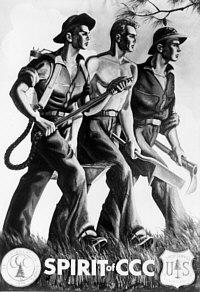 “His mother has completed the ninth grade in school and his father the fourth. Orville’s home life is not very pleasant. There are nine children two girls and seven boys. The girls are married and not living at home. The other children at home are under sixteen, all boys. They live in a run-down four-room house which has no convenience whatever. I have been in this home a number of times, knew Orville personally and know the condition of the home he came from.
“The mother works out when she can get it and is sole. The father works not at all, although he used to be a good worker and provided well for his family. He is letting drink get the best of his manhood. The father is 46 years old and the mother is 38 years old.
“There are no magazines or daily papers come to their home. I have known the children to have to go to school without breakfast. They have received aid from the Relief. He [Orville] spends his leisure time in reading, going to movies and playing ball. He is not a church member and does not attend church.
“The yearly income of family is $180.00.”
Maude R. Chandler
October 2, 1939
From a collection of approximately 1,300 Work Projects Administration/Virginia Writers’ Project life histories, social-ethnic studies, and youth studies that were written by agency staff members between 1938 and 1941.
source: http://tinyurl.com/2yb9w3
Andy+Orville+Bozzel CCC Appalachia+VA WPA +Virginia+Writers+Project appalachian+culture appalachian+history history+of+appalachia
My dad worked most of his adult life at Coal, Feed and Lumber Company —hardware— in downtown Marshall, NC. He delivered products. I remember for many years, Coal, Feed sold a lot of coal, which was pretty prominent. Dad drove a truck delivering coal, and I can remember him coming home in the fall and winter after having spent all day in the basement loading coal, taking it out and unloading it. They didn't have dump trucks or any kind of equipment to load that coal other than shovels. So, he shoveled a lot of coal.
At that time there were several independent coal haulers in this county. A lot of fellows had trucks that they drove to Kentucky and Virginia, and brought coal to this county that they delivered to homeowners. Coal was a pretty predominant heating fuel for a great number of years.
There was some wood burned, but the transition was not from wood to oil, it was from wood to coal to oil. [I remember as a child my dad getting home from work and being covered with coal.] Absolutely covered. Looking more like a coal miner than a delivery person for hardware.
[My mom was a] homemaker primarily. She worked for a short period of time at a store in Marshall. At a variety store—the National Five and Ten. When we lived above Marshall she did domestic work for some of the store owners that lived not far away. She would go in and do housecleaning and things of that nature for them.
We farmed a bit. We never had much of a farming operation. When we lived above Marshall, my dad and my dad's brother and their father had a farm operation that included—in addition to tobacco—corn and some wheat and oats, and things of that nature.
We did not have electricity until I was about eight or nine years old. That was when we moved to Walnut Creek. That was basically [just] the lights. A little later on we were able to buy a refrigerator, and that was a marvelous thing to come into the house. The first thing we got rid of were the oil lamps; that was an event and a nice step up, but it wasn't like we had televisions and all the conveniences that we have now. The next thing, as I said earlier, was getting that refrigerator and having a place to keep the milk cold other than the spring house. Other things just kind of came on gradually as we could afford them.
Jerry Plemmons
Marshall, NC
born 1938
November 10, 2000 interview
http://docsouth.unc.edu/sohp/K-506/K-506.html
The Spring House was a common site at many farms in the past. It was a pre-electricity version of a refrigerator – a crude structure built into the side of a hill with a spring running through it. Cool waters helped the farmer to keep milk, cheese, eggs and other perishables fresh.
Under the best of circumstances it was built over a spring where the water was coldest as it bubbled up to the surface. Otherwise a small stream was diverted from a nearby creek which ran through the building.
“We had a well that was close to the house and my father built a spring house by the back door. We could pump water through the spring house to cool the milk or any other thing that was stored there. Sometimes we would pump the water a couple of times aday to cool the milk especially when my mother wanted to churn the milk for buttermilk and butter.” --Jo Byrd Sammons (Her mother was from Craig Co. VA and her father was from Bland Co. VA)

“We had no electricity nor running water so we stored milk and other things like that in the spring house. We were poor but did not realize it as we were equal to everyone else. We would get water from the spring house, located about 100 yards from our house. We always checked for the big black snake that often would be on the ledge over the door. We always would keep our eye on him as we scooped up the water and darted back out. On the fourth of July was the only time we had watermelon, ice cream packed in dry ice, and soft drinks. Mommie would put them in the spring house to cool."
Nannie Nadine Bailey (1932-2003)
Peel Chestnut Mountain, McDowell County, WV
Please welcome guest blogger Bob Sloan.
This is about a man who's a legend where I live, a man who once walked
the same ground as the rest of us, but left such a track more than seventy years after his death in 1935, people still talk about him.
When I was a boy it was common to be entertained, especially around
Halloween, by tales about "Doc Brown the grave robber." My grandma could scare the water out of a porch full of kids, describing this mad monster from a time that back then wasn't all that distant.
 She'd point down the hill to Open Fork Road, and tell us Doc Brown could had sometimes been spotted riding that very trail toward a graveyard, his passage lit by a kerosene lantern bobbing the rhythm of his mule's gait. Shovel tied to his saddle, sometimes with an anonymous assistant riding behind, everybody knew he was off to dig up some newly buried corpse. And not only did he dig up dead bodies, my grandma said he cut 'em up, sliced 'em to pieces right there beside the grave.
With grandchildren gathering closer, Granny'd nod and whisper, "Yes sir, Doc Brown often rode that very road yonder." My cousins and I would stare at the gravel lane and shiver, seeing personal visions of a grave robber's lantern jolting along in the dark.
"Doc Brown the Grave Robber" was a wonderful story, especially since I half-believed long shadows under moonlit trees might conceal a scary someone slipping closer. After I grew up, I figured like all our mountain stories, there was at least a grain of truth in the ones about Doc Brown. And not all that long before her own death, Dr. Louise Caudill gave me an entirely different interpretation of the "Doc Brown tales," a surprisingly different look at the man.
"Wales Brown was a fine physician," Louise told me over a cup of coffee one afternoon. "As good a doctor as ever worked in these mountains," she insisted. Then she told me the rest...
Louise said Wales Brown couldn't abide a meaningless death. In a time when survivors were often content to blame the passing of a loved one on "milk fever" or "bad air," or simply lay their loss at the feet of a hard, unforgiving God, Doc Brown needed to know the real cause.
But in the 1920's, autopsies weren't often performed, and even when asked permission for one, families frequently refused. "Home burial" was general practice, and there was no sterile, distant hospital in which to do perform such procedures. Typically, they were done by lamplight, on a kitchen table around which the survivors would sit on evenings yet to come. Perhaps their frequent refusal wasn't all that unreasonable...
But in worrisome cases where an autopsy might yield knowledge that could save another life, or warn of a possible outbreak of deadly contagion, for Doc Brown no refusal was acceptable. That's why, on moonlit evenings, Doc Brown and his confederate rode the dark hills around Rowan County homesteads. Under cover of night they moved aside six feet of earth, opened a box of instruments, and by the soft glow of Doc's lantern, the body revealed its grisly secrets. Wales Brown learned what killed his patient.
There is at least a kernel of truth in the generations of tales told in these old mountains. "Doc Brown the Grave Robber" is a story with a truth I never imagined when I was a boy.
How often does someone you thought was a monster turn out to be a hero?
Bob Sloan is the author of a short story collection ("Bearskin to Holly Fork") and "Home Call: A Novel of Kentucky." His novel “Nobody Knows, Nobody Sees” was published in the Spring of 2006. Bob and his wife Julie live east of Morehead KY, on a small farm that belonged to his grandfather and his father.
Related post: "A curious middle name"
Wales+Brown Doc+Brown grave+robbing Rowan+County+KY appalachia appalachian+culture appalachian+history history+of+appalachia
July 22 will mark the 84th anniversary of Nick Grindstaff’s demise. His gravestone reads: “Lived alone, suffered alone, died alone,” but in the 1870’s he was one of Johnson County, TN’s most colorful residents. Grindstaff was born on December 26, 1851. By the time he was three years old both his mother, Mary Heaton Grindstaff, and his father, Isaac Grindstaff, had died. Nick and his three orphaned siblings lived with relatives until Nick was 21 years old, at which time the parents’ farm was divided equally among the children. Nick built a house on his portion and began to farm the land. After five years of farming Nick sold his farm and decided to go west.
He was an adventurer, and like so many young men of that era, smelled his fortune in California gold. While there he met, fell in love with, and married a young woman. The woman died. On his way back to Johnson County, legend says Grindstaff was coaxed into the rear of a saloon by a “lovely lady,” whose partner in crime robbed him of his fortune. In another version of this story, he was not robbed, but drank all his money away when his wife out west died; when he became destitute he moved back to Johnson County. In either case, he returned to Tennessee and bought land on top of Iron Mountain, were he lived for 40 years as a hermit with only his dog Panter, a steer and a pet rattlesnake (said to have been killed by a man named Sam Lowe) for company.
On July 21, 1923 Baxter McEwen went by to check on Nick. He found him dead on the bunk in his hut. His faithful dog had been keeping watch over his master's dead body for the previous three or four days. The dog had to be tied before men could carry out Nick's body. Nick was buried, with 200 in attendance, on the mountain peak where he had lived. The house was eventually dismantled for the wood and tin, but the imprint is still on the ground surrounding the gravesite.
Two years later locals erected a chimney-shaped monument made out of mountain granite, which even included some of Nick’s pots and pans in the construction. The citizen who kept the general store down in Shady Valley, Tennessee, where Grindstaff would buy his meal and bacon twice a year, wrote the words. Somebody had to. Nick Grindstaff was a special man, with a story no one ever quite knew.
Today the Appalachian Trail passes by the area. The Appalachian Trail Conference maintains the monument that marks Nick's burial site.
sources: http://www.mce.k12tn.net/johnson/legends/nick.htm
http://johnsoncountychamber.org/JCChamber/chamber/Docs/NewsletterOct.pdf
Uncle+Nick+Grindstaff Iron+Mountain appalachia appalachian+culture appalachian+history history+of+appalachia
Please welcome today's guest blogger Debra S. Youngblood
This article is an edited version; original post is here.
Grandma was born in the late 1800's. She was kicked out of her father's house when her mother died and he remarried. She was seven years old. She found a place to work, cleaning and cooking, and lived there until she was 14, when she met my Grandpa. They were married, and she bore him 9 children that lived. A set of twins died shortly after birth, and, from what I was told, she had a miscarriage while cooking supper. As it was told to me, she "shoved it aside with one foot and kept on cookin".
She always chewed tobacco, grown by my Grandfather, picked by the grand boys and hung to dry in the huge barn. Don't know if she drank corn liquor, but I do know that my dad had many stills that dotted the countryside during the 20's and 30's. He did tell me his father came upon one of his stills by the banks of the Coal River and promptly threw it into the middle of the river. He said it was a mighty fine still, and was sorely missed.
When all of her children were home, she cooked a breakfast, dinner, and supper, for her huge family and all the men who worked for them. From the time I can remember her face was deeply wrinkled, her hair snow white, a testimony to her Indian ancestors. Perhaps when she saw my skinny-legged, bean pole self, she was aghast that her son could produce such an off-spring. I know I favored my Grandma on my mother's side, and there was no love lost between the two Grandmas. Actually, one of her sons (my dad) married my mother, and my mother's brother married my father's sister. I'll let you decipher that one. That made the children of these two marriages, again, what I was told, "cousins twice over."
I try to imagine what Grandma’s life was like living in rural West Virginia at the turn of the century. What a time to live and be young. Working from dawn to dusk, Sundays going to church, and Saturday's driving a mule-drawn cart into town, to sell vegetables or buy supplies. Church was the only outlet for fun and social gatherings. Where young women were courted, and gossip was whispered, and new clothes were shown off. If anyone really listened to the preacher, it's a miracle. . . Back then when you were baptized they dunked your head in the Coal River, winter or summer, and fire and brimstone lit up the pulpit like fireworks at a Kiss concert.
My Grandma's life was hard, I know that much. Harder than even I can imagine, but she lived to a grand old age, making people jump to her tune to the very end. In her old age, she had acquired a certain wealth, and we all know how that affects the heirs. I hope she had a good time making them all hop to her demands. Though, I doubt by that time she had many demand, except keeping her supply of chewing tobacco well-stocked.
Not long before my Grandma died, a young woman doing a thesis on Appalachian culture, interviewed my Grandma. She found her story so fascinating that the tapes and transcripts are now locked away in the West Virginia archives. Quite an honor for a cantankerous, tobacco-chewing, salt of the earth hillbilly, now is it?
Coal+River West+Virginia appalachia appalachian+culture appalachian+history history+of+appalachia
If you missed the Gatlinburg (TN) Scottish Festival & Games back in May, or can’t wait till November for the Scottish Clans of the South to gather in Hendersonville, NC, don’t panic. The Grandfather Mountain Highland Games in Linville, NC is the largest assembly of Scottish clan society members in the world, and it’s coming up July 12-15.
Scottish-Americans, Scotch-Irish Americans, Scots and would-be Scots converge each year on two rock-strewn pastures, known as MacRae Meadows, in the shadow of the tallest peak in the Blue Ridge chain, the 5,964-ft. Grandfather Mountain.
Dancing, running, throwing large poles and bragging about one's Scottish ancestry-it's all part of a day's work at highland games.
The centuries old Scottish tradition of staging competitions at cattle fairs continued when Scottish immigrants came to North Carolina in the 18th century. The newcomers felt at home in the North Carolina mountains, and descendants of these pioneers continued to speak Gaelic into the early 20th century.
Scottish heavy athletics events include Clachneart (16 lb. stone throw), 22 lb. hammer throw, 28 & 56 lb weight throw, 56 lb toss for height, caber toss, tossing the sheaf (16 lb.) and Highland wrestling.
The caber toss is a contest in which brawny men flip 21-foot (6.4-meter) wooden poles weighing hundreds of pounds end over end. If you imagine that the brawny man is standing in the center of a clock face looking toward the number 12, the objective of the caber toss is to make the pole land so that it's pointing exactly at high noon.
Putting the pole squarely on the imaginary 12 is extremely difficult, however. Sometimes years pass before a contestant nails a caber toss with a perfect landing. More likely, a contestant who can get his caber to point to 11 or 1 on the imaginary clock will win. The first recorded caber toss competition was in 1574.
http://lcweb2.loc.gov/cocoon/legacies/NC/200002907.html
http://news.nationalgeographic.com/news/2005/07/0707_050707_highlandgames_2.html
Grandfather+Mountain+Highland+Games caber+toss Scottish+Clans appalachia appalachian+culture appalachian+history history+of+appalachia
The much anticipated grand opening of Lynchburg, VA’s first true skyscraper had been scheduled for July 4, 1931, but a last minute political twist changed the Oppenmeyer Tower’s fate forever.
Joseph J. Oppenmeyer, a newly-transplanted European diamond mogul, commissioned the building's design and construction in 1929. Construction had been steadily progressing for three years and was only two weeks from completion, when the Federal Land and Buildings Commission passed a national ordinance that required any building over four stories tall to include an elevator.
The final design for Oppenmeyer’s seventeen-story building, unbelievable by today's sensibilities, did not include an elevator.
The Elevator Ordinance, as it was later referred to, infuriated the cash-strapped Oppenmeyer, who was badly in need of tenant income, as his fortune had been in slow but sure decline since the onset of the Depression. No amount of last-minute political lobbying in Washington D.C. could secure a grandfather clause for the Oppenmeyer Tower, which stood on June 30th completed but empty, lacking an all-important occupancy permit.
On the first day of July 1931, in total dismay and disgust over the situation, Oppenmeyer publicly vowed to hurl himself nude from the building's pinnacle at noon on the rapidly-approaching July 4th holiday. His demise was averted, however, mid-morning of the 4th, when it was announced to the gathered crowd of newspaper reporters and curious onlookers, that the Allied Arts Group, an out-of-state consortium of silent investors, had agreed to buy the Tower (for pennies on the dollar, however). The Allied Arts Building officially opened six months later with a new name and a newly-retrofitted elevator. Ironically, Joseph Oppenmeyer, forced into bankruptcy in the meantime, spent the remaining five years of his life as an employee of the Allied Arts Group - operating the elevator.
source: http://www.retroweb.com/lynchburg/attractions/main.html
Lynchburg+VA Joseph+Oppenmeyer Allied+Arts+Building appalachia appalachian+culture appalachian+history history+of+appalachia
"We had our own fun. We swang on grapevines and we had a seesaw. And we made our own merry-go-round. We went fishing. We fixed our own pond and had our own swimming hole. Of course we had to work hard before we could play.
"[One game played back then that nobody knows about now is] Antknee Over. Somebody would get on one side of the house and somebody on the other and you had to catch that ball before it hits the ground and you run around the house and tag them. You holler "antknee over." And then we played whip-crack. You line up in a line and the person on the end really got it. You run with them and you come around and snap them. When we was in the boggle school, we was little then, and we used to play in the leaves.  "We had ballgames, and jack rocks. We read a lot. We read anything we could get our hands on. Mother didn't allow us to read funny books. Mother didn't think we should read funny books, but we'd hide them and read them. There was a series of mystery books that had a lot of sequels and my sister always got them, she'd borrow them from other people. We read them a lot. We was great readers and I still do a lot of reading."
Georgia Havens
Suiter, VA
Born 1928
Interviewed 2001
Bland County (VA) History Archives
http://www.bland.k12.va.us/bland/rocky/transportable/georgiainterview.html
swimming+hole appalachia appalachian+culture appalachian+history history+of+appalachia
July. Hottest, most humid month of the year. So put on your highest boots, long pants, and a long shirt, and head for the woods. Because July is also black raspberry season, and you’re not going to find those sweet sweet delights any other way (oh, I guess you could plant a couple of rows in the garden, but where’s the adventure in that?) In much of Appalachia, black raspberries are simply called blackberries, even though they are not. Call them Rubus occidentalis if you’re of a scientific bent; Blackcap, or Scotch Cap if you’re not. The black fruit makes them look like blackberries, but the taste is unique and not like either red raspberry (Rubus idaeus) or blackberry (Rubus fruticosus).
Don’t be fooled by the red berries on the plants. They are not the same as the red raspberry, but simply unripe berries. They’ll be a lot harder to pull off than the ripe berries anyhow, so why fight? You’ll have sore thumbs & index fingers by day’s end.
The two raspberries DO share the distinctively white underside of the leaves, and fruit that readily detaches from the carpel. One big difference between the two is that black raspberry’s stems are more thorny.
So throw a rope over your shoulder to hold your berry bucket. You may be tempted to skip the heavy clothing and the fancy sling, but if you do you’ll have hell to pay. Raspberry’s arching canes typically reach 3 to 5 feet high, forming dense, tangled, thorny thickets. Canes readily root at the tips when they contact the ground. You’re going to need both hands to extricate yourself from them.
And the boots? Well, copperheads and diamondback rattlesnakes love to loll on sun-warmed rock slabs in wooded clearings, and they just will not take kindly to you interrupting their sessions.
Resist eating your all your finds before you get home! There’s no Appalachian summer meal finer than fresh sweet corn, green beans, and a salad with homegrown tomatoes, all finished off by a fresh-from-the-oven, topped-with-vanilla-ice-cream, black raspberry cobbler!
Black+raspberry appalachian+culture appalachian+history history+of+appalachia
Originally posted at Hillbilly Savants by Eric Drummond Smith
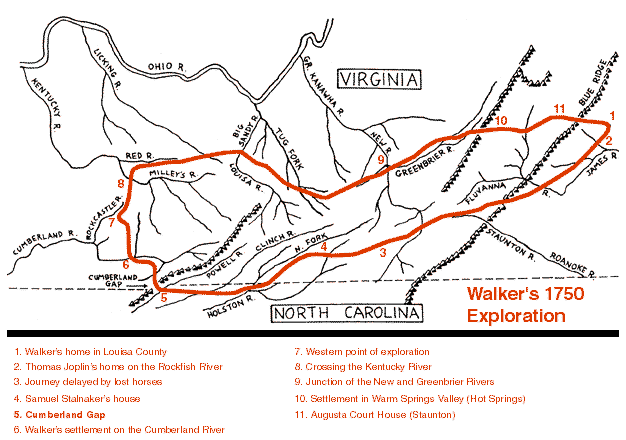
April 29th. The Sabbath. The Bitten Horse is better. 3 Quarters of A mile below the house is a Pond in the Low ground of the River, a quarter of a mile in length and 200 yds. wide much frequented by Fowl.
30th. I blazed a way from our House to the River. On the other side of the River is a large Elm cut down and barked about 20 feet and another standing just by it with the Bark cut around at the root and about 15 feet above. About 200 yards below this is a white Hiccory Barked about 15 feet. The depth of the water here, when the lowest that I have seen it, is 7 or 8 feet, the Bottom of the River Sandy, ye Banks very high, and the Current very slow. The Bitten horse being much mended, we set off and left the lame one. He is white, branded on the near Buttock with a swivil Stirrup Iron, and is old. We left the River and having crossed several Hills and Branches, camped in a Valley North from the House.
May the 1st. Another Horse being Bitten, I applyed Bears Oil as before Mention'd. We got to Powell's River in the afternoon and went down it along an Indian Road, much frequented, to the mouth of a Creek on the West side of the River, where we camped. The Indian Road goes up the Creek, and I think it is that Which goes through Cave Gap.
8) Bell County (Kentucky) Historical Society: Thomas Walker 250th Anniversary of Walker's Discovery of the Cumberland Gap:
Originally published at Hillbilly Savants by John Kerns
 The entrance to Old Gray Cemetery in Knoxville, Tenn. The historical marker reads: "Old Gray Cemetery, incorporated in 1850, is the resting place of William G. Brownlow, Tennessee Governor and U.S. Senator, as well as two other U.S. Senators, eight U.S. Congressmen, 26 mayors of Knoxville, and numerous ambassadors, judges, editors, artists, authors, educators, military leaders, physicians and industrialists."
Any history buff just has to get a kick out of
Named after English poet Thomas Gray, who wrote "Elegy in a Church Courtyard," the gentle slopes of Old Gray lie between what is now an adult bookstore and a cabinet manufacturer. Out of downtown, you take Broadway, a noisy four-lane that guides motorists through the blighted urban holes beneath Interstate 40. Just over a long hill from the highway overpass, the cemetery sits to the left. Pass through the narrow iron and marble gates of Old Gray and the noise and bustle of the city falls away.
Here are a few pictures from today's excursion up to the cemetery. If you want to see all of them, go here.


 The grave of one of the more fascinating characters that lies in Old Gray, William G. Brownlow. A pro-slavery, yet strict Union man, Brownlow was a controversial national figure. His paper, The Knoxville Whig had a huge distribution, due largely to Brownlow's editorials. After the war, he was elected Tennessee's first Reconstruction Governor, and then to the U.S. Senate.

 The grave of Charles McClung McGhee, railroad tycoon and founder of Knoxville's Lawson-McGhee library.
 Old Gray's north wall. On the other side is Knoxville National Cemetery.
 One of the Victorian ladies that keeps watch over the cemetery.
 A Confederate soldier.
 Looking northwest.

 Two more ladies.


 St. James Episcopal Church stands in the background as afternoon shadows fall upon Old Gray.
 A broken headstone.
 The grave of Charles McGhee Tyson, after whom Knoxville's airport is named.
 Looking south.
Originally posted at Hillbilly Savants by Byron
Like old dinosaurs lurking in the background, these dilapidated buildings of our ancestors sit in various states of disarray throughout all of Appalachia.


Some still being used, small repairs visible, keeping out the rain.


My grandfather would question any man's worthiness that didn't own a barn.


Many a country boy and girl has spent a good portion of their childhood inside these clapboard fortresses.


Cows, horses, pigs, and even us Hillbillies found shelter and comfort in their confines.


If these old buildings could talk, what a tale they would tell!
All of the above pictures were taken by me and were all within a 5 mile radius of my house in Corryton, TN. Click on this link to see all of the barns that I photographed today.
Originally posted at Hillbilly Savants by Mike Mason
In 1939, the Hydro-Electric boom in the Appalachian Mountains was reaching it’s peak. Rural hollers (a steep valley, for our non-resident readers) throughout the region were being flooded to bring modern technologies, jobs and, ironically, flood control to the Southern Appalachians. I’ll leave the debate for whether or not organizations such as the Army Corps of Engineers, the Tennessee Valley Authority and Appalachian Power have served the region for the greater good to others with more introspective opinions on the subject. I want to focus on one community, lost under seventy feet of water of the New River. The place is know as Dunkard's Bottom today but to the residents of the community, it was Mahanain. It’s kind of ironic given the Biblical history of the city that shares this name, meaning “Host”, would see similar fate.
John Buchannan, agent for the Wood's River Company and assistant surveyor of Augusta County, made his exploratory trip to the region in the fall of 1745. He found inhabitants already in the New River area (The New River was labeled “Wood’s River” on early survey maps due to the Company’s intensive mapping of the area). These inhabitants were German eccentrics of German Seventh Day Baptists from the Ephrata Society in Lancaster County, Pennsylvania, called Dunkers Dunkard's. (Many people incorrectly refer to this sect of the Anabaptists as Dunkard's. The word "Dunker" was actually a anglicized corruption of the German Word "Tunker", which means "dipper" or immerserer referring to the mode of baptism practiced by this group.) It is reported that 900 acres of rich river bottom-land was chosen and surveyed for the colony, which later had the only mill west of New River. However, many of the Dunkards became unhappy with their lot in the wilderness on the frontier of a new nation. They were said to be "odd" people who were very clannish and shunned by other settlers.
In 1749 the Moravian missionaries noted that in the region of Dunkard's Bottom they found a "kind of white people who wore deer skins, lived by hunting, associated with the Indians and acted like savages." The Dunkard's were also pacifists. They were ill suited for life on Virginia's wild frontier. Thomas Walker describes the Dunkard's as: "A Sect of People who call themselves of the Brotherhood of Euphrates, and are commonly called the Dunkard's, who are the upper Inhabitants of the New River....The Dunkard's are an odd set of people, who make it a matter of Religion not to Shave their Beards, lay on beds, or eat flesh, though at present, in the last, they transgress, being constrained to it, they say, by the want of a sufficiency of Grain and Roots, they have not long been seated here. I doubt the plenty and deliciousness of the venison and turkeys has contributed not a little to this. The unmarried have no property but live on a common stock. They don't baptize either Young or Old, they keep the Sabbath on Saturday, and hold that all men shall be happy hereafter, but first must pass through punishment according to their Sins. They are very hospitable."
In the year 1740 there were 36 single brethren in the cloister, and 35 sisters. At one time the society numbered nearly 300. For the next decade the community continued to grow until their presence in the valley became an issue for native inhabitants. In 1754, George Hoopaugh, one of the Dunkard's, recorded that the previous May, 60 "Norward Indians" came to his house and burned it and the stable. Before that, the Indians had threatened him, burned his corn and killed his best dogs. In May of 1755, Henry Zinn, another Dunkard, was killed on the New River by the Indians. This was probably one of the reasons for the sudden and premature dispersal of the remaining Dunkard's. Recorded in the chronicles of the Cloisters: "They fled as if they were chased by someone, for justice persecuted them for the spiritual debts which they had contracted in the Cloisters, until they reached a water which is running toward the Mississippi, called New River, beyond all Christian government. There they made their home among riffraff, the dregs of human society who spend their time murdering wild creatures. With such people they had communion instead of their Brethren whom they left."
Later settlements would be centered in the same area of what was Mahanain. The Wilderness Road would follow the New River through this area. William Ingles would establish his family’s homestead and river portage ferry here. His wife, Mary Draper Ingles, would be abducted during Shawnee raid and taken to Kentucky only to escape and follow the river back home. Modern day Radford, an 1850's Tennessee and Virginia ailroad town, is just a few miles downstream from the old community. Today, Claytor Lake covers all signs of the Wilderness Road and Dunkard’s Bottom. All archeological surveys now must contend with 70 years of river silt 4,500 acres of lake surface above.
All information above was pooled from Rootsweb.com and “The Brethern in Virginia” by Roger E. Sappington.


